Silver Coins vs Silver Rounds: Which Is Better?
Key Takeaways:
- If you’re looking into silver coins vs silver rounds, both expose you to silver but are different in terms of their statuses as legal tender, minting authorities, and premiums.
- One of the main differences between silver rounds and coins is that coins are usually more widely recognized and are backed by the government. Rounds offer more silver per $1, making them perfect for maximizing ounces and cost-efficient silver stacking.
- Base your choice between silver coins and rounds on the balance you prefer among liquidity, affordability, and investment goals.
Your grandfather invested in silver, your father followed suit, and you’re sticking to what worked for them—a smart move at a time when silver is rising in value and holding strong. But they always filled their safes with coins from the coin shops they frequented in town.
They never taught you about rounds. Now, you’re left to wonder whether to invest in silver coins vs silver rounds.
Precious metals collectors sometimes struggle with the decision to purchase silver coins or silver rounds. However, there are differences between silver rounds and coins that you should consider before making your investment selection, including those mentioned below. If you decide to purchase both forms of this precious metal, it’s a good idea to know as much as possible about them to ensure you get the most for your money. The experienced dealers at First National Bullion and Coin offer the following advice on how to decide which form of silver best suits your needs.
Silver Coins vs Silver Rounds: The Main Differences Between Rounds and Coins
Silver rounds aren’t valid currency, unlike silver coins. Therefore, if this is your focal point, it would be best to choose the latter. The federal government mints silver coins that can be used as currency. Another difference is that coins are often produced with cultural and patriotic themes reflecting the time of their creation and the government’s preferences.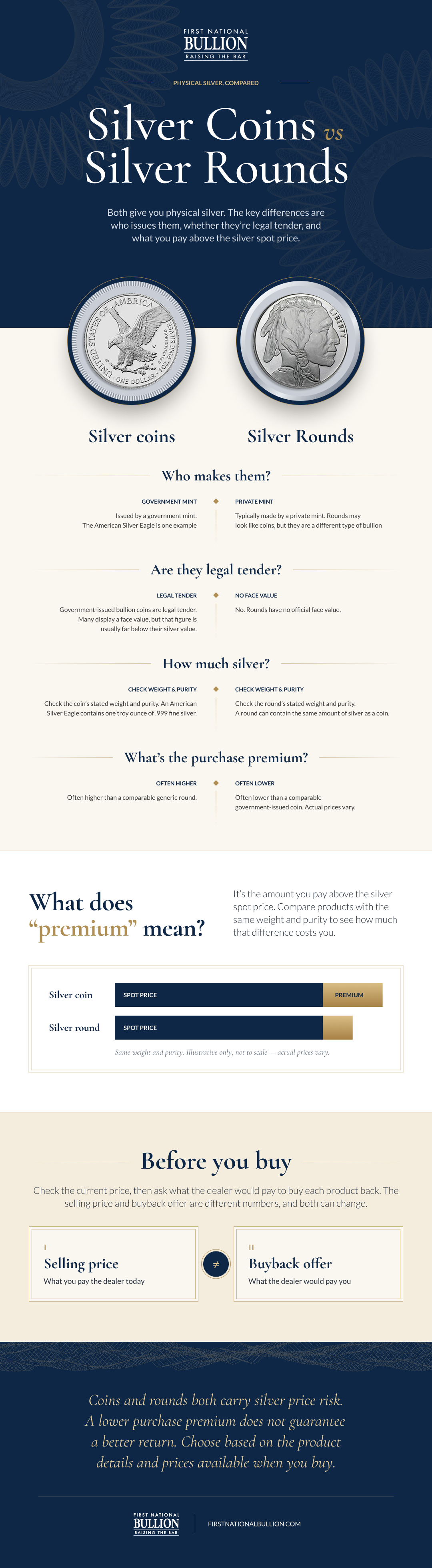
Better Purchase
Although there are some differences, both forms of silver could be excellent purchases. For example, purchasing rounds would be a great idea if your main priority is collecting silver. Rounds don’t carry face value, nor are they marked up like coins. The unique sizes, designs, and shapes of the rounds make them an excellent selection. Regardless of your collection type, adding silver rounds can improve the mix.
When it comes to silver coins, they can be both collector’s items and currency you can use. Over time, these coins can become rare, increasing their value. The price you pay for these special coins may be marked up, and the markup often depends on the current spot price of silver.
Investment Factors
Rounds are the best option if your primary objective is investing. The value of rounds is based on their precious metal content, making them more affordable than silver coins. Another factor to consider is the various designs of the rounds. If you intend to sell your silver quickly, coins are often the better choice. Due to their greater divisibility, coins are easier to sell than rounds. However, if time isn’t a factor, silver rounds could yield higher profits due to their lower production costs.
Inflation Considerations
With inflation's rise and fall, it’s vital to understand how it affects your precious metals investments. Due to uncertainty, silver rounds are typically more popular than coins for their protection against inflation.
Partner With First National Bullion for Your Silver Investments Today
If you live in San Diego, high-quality silver bars and coins are available at First National Bullion. We buy and sell all kinds of precious metals, including silver, platinum, gold, and palladium. Collectors who are looking for trustworthy dealers and high-quality service should give us a call at (858) 304-7580 to speak with one of our precious metals experts.
FAQ
1. Are coins or rounds better if you want to build a hedge against worldwide inflation?
As you explore silver coins vs silver rounds, consider that both options can be effective inflation hedges. Coins, however, are usually more strongly recognized globally, which might make them easier to resell during hard economic times.
2. Do coins or rounds provide better liquidity for private sales?
A core difference between silver rounds and coins is that coins are instantly identifiable, making them a top choice for private buyers. You can still sell rounds relatively easily, but a buyer might ask for an extra check (e.g., brand verification or weight testing) before purchasing one from you.
3. Which silver option is simpler to stack physically?
Because they are uniform in thickness and size, silver round pieces are easier to stack in boxes or tubes. Coins, on the other hand, might vary in size depending on the mint that issues them, making them slightly harder to stack in a tight space.