

3 Simple Rules for Investing in Bullion
Jon Cavuoto

What 3 Rules Should You Follow when Investing in Gold & Silver Bullion?
Key Takeaways:
- Investing in bullion is primarily about long-term wealth preservation, not short-term price changes.
- Deciding what bullion is a good investment for you depends on your goals for inflation protection, diversification, and wealth preservation.
- Avoid timing the market, avoid collectible coins with high markups, and focus on recognized products from a reputable dealer like First National Bullion.
Since the COVID-19 pandemic, there has been a growing interest in physical gold and silver. The economic fallout from the pandemic led to economic uncertainty, heightened inflation, and market volatility, which made investors seek financial stability through physical assets.
Physical precious metals provide lasting wealth protection, enhance portfolio diversification, and serve as a hedge against currency volatility. However, to achieve this success, one must combine self-discipline with strategic thinking.
In this blog, we’ll explain the desirability of bullion as an investment tool and the 3 simple rules of investing in bullion that will augment your investment portfolio without making common costly mistakes.
Should I Invest in Bullion?
Bullion refers to physical precious metals that are valued primarily for their metal content. Gold and silver have historically maintained purchasing power during periods of currency weakness and financial instability. By owning gold bullion bars, silver bullion bars, and other precious metals, you get to hold assets of real high value regardless of how the economy is doing.
However, note that bullion is generally a good investment for long-term investors looking for asset security. It may not be ideal for short-term speculation because prices can fluctuate. The primary role of bullion is value stability, not rapid gains.
The 3 Simple Rules for Investing in Bullion
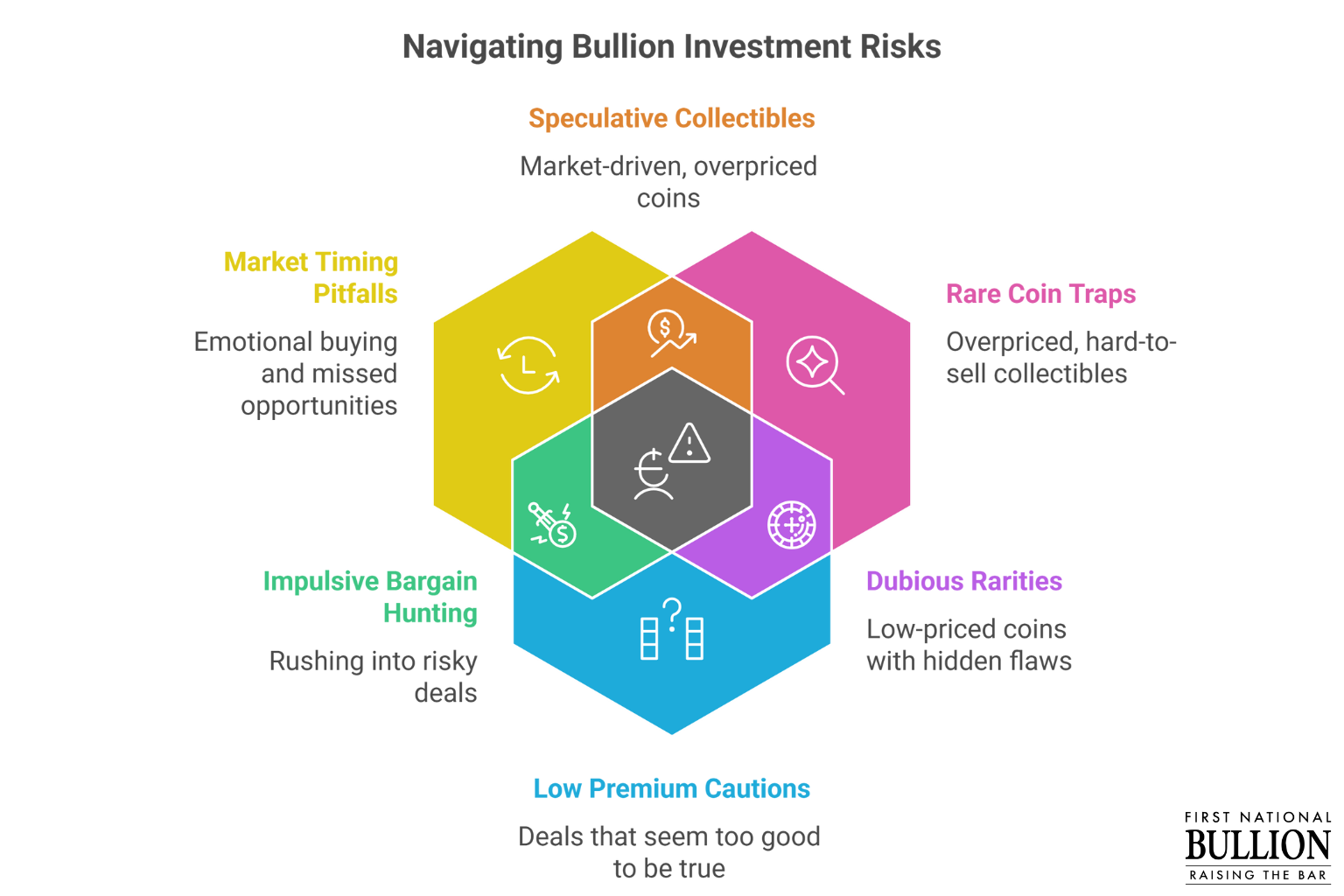
Successful bullion investing starts with adhering to these three fundamental rules. They’ll help you make smarter decisions. Here’s a diagram summarizing the rules and risks involved:
Rule #1: Don’t Try to Time the Market
Many investors keep an eye on the market, waiting to enter when buying is at the absolute bottom, hoping to sell later when it peaks. While it’s understandable to be cautious with your investment strategies, there’s such a thing as being overly meticulous, and that perfect timing is nearly impossible.
Know that markets and prices are influenced by inflation data, global events, interest rates, and investor sentiment. If you spend too much time overanalyzing market charts, you may hesitate to move when you should, and vice versa. Waiting for the perfect price often results in missed opportunities.
Therefore, when investing in bullion, focus on long-term accumulation and consistency. Make decisions based on what works best for you financially in that moment. You may even set up a budget and purchase metals at regular intervals, which will reduce emotional decision-making. In case of uncertainty, work with an investment professional, bearing in mind that their services come at a fee.
Rule #2: Avoid Rare and Collectible Coins
Now that you know that bullion is a good investment, avoid relying on ads. Many precious metal companies that advertise on television or the internet use high-pressure tactics to promote “rare” or “limited edition” collectible coins with high markups above their metal value, and buyers are convinced they can sell them at a much higher price later. But, here’s the issue:
- Collectible coins are rarely all that rare. A coin that’s 100 years old isn’t necessarily rare.
- Collectible coins often require substantial premiums to invest in.
- Their value depends on collector demand, and they can be difficult to resell because they appeal only to buyers who are aware of their significance.
- Price appreciation may lag behind bullion. Investors often have to wait for gold and silver prices to triple or double just to break even.
When investing in bullion, standard bullion offers better transparency and liquidity than rare coins. Examples of widely recognized bullion products include:
- American Platinum Eagle Bullion Coin
- Gold bullion bars
- Silver bullion bars for sale
Opt for investment-grade bullion and avoid high-markup collectibles unless you’re a knowledgeable numismatic collector.
Rule #3: Look for Low Premiums, But Be Cautious
Premiums are the additional costs above the metal’s spot price. Lower premiums generally mean that more of your money goes directly into the metal value. While it’s certainly a good idea to seek out good deals, it’s equally important to be careful. Other warning signs include:
- Poor or nonexistent customer reviews
- Hidden fees
- Unclear buyback policies
- Delayed delivery timelines
When investing in bullion, protect yourself with the following:
- Choose a dealer who communicates with transparency
- Read verified customer reviews
- Ask about total costs upfront
- Confirm delivery timeframes
- Verify buyback policies
A reputable dealer will clearly explain pricing, premiums, and transaction procedures. Even when their prices are higher, saving a small amount of premiums is not worth risking your entire investment.
Find Reputable Bullion Dealers
Bullion makes a good investment. But, investing in bullion is about discipline, patience, and smart product selection. Following the three simple rules for investing in bullion will significantly improve your experience and strengthen your portfolio.
First National Bullion is here to support you every step of your bullion investment journey. As a trusted national bullion dealer operating since 2006, we bring years of industry experience and informed insight to every client interaction. Our dedicated U.S.-based support team will guide you in making the right investment steps.
Check out our large inventory of widely recognized bullion across our physical and online stores. Explore our metal collections and enjoy free shipping for orders $199+.
FAQs
What is bullion?
Bullion refers to physical precious metals like gold, silver, platinum, palladium, and other metals that are valued for their metal content, not for their collectible value.
Is bullion a good investment during inflation?
Yes, investing in bullion has historically served as an inflation hedge because precious metals retain their purchasing power even as currency values decline. So, even in the midst of inflation, keep building a strong portfolio.
How much of my portfolio should I allocate to bullion?
Many financial professionals suggest allocating 5-15% of a portfolio to precious metals. Choose an appropriate figure based on your risk tolerance and financial objectives.
The statements made in this blog are opinions, and past performance is not indicative of future returns. Precious metals, like all investments, carry risk. Precious metals and coins may appreciate, depreciate, or stay the same in cash value depending on a variety of factors. First National Bullion does not guarantee, and its website and employees make no representation, that any metals for sale will appreciate sufficiently to earn the customers a profit. The decision to buy, sell, or borrow precious metals and which precious metals to purchase, borrow, or sell are made at the customer’s sole discretion.