How to buy gold online (and what to watch out for)
Sponsored content | Paid content from First National Bullion
- Start with the price, the whole price
- Verify the dealer
- Pick a payment method with eyes open
- Understand shipping and insurance
- Think about your data
- Know your exit before you enter
- Consider the in-person option
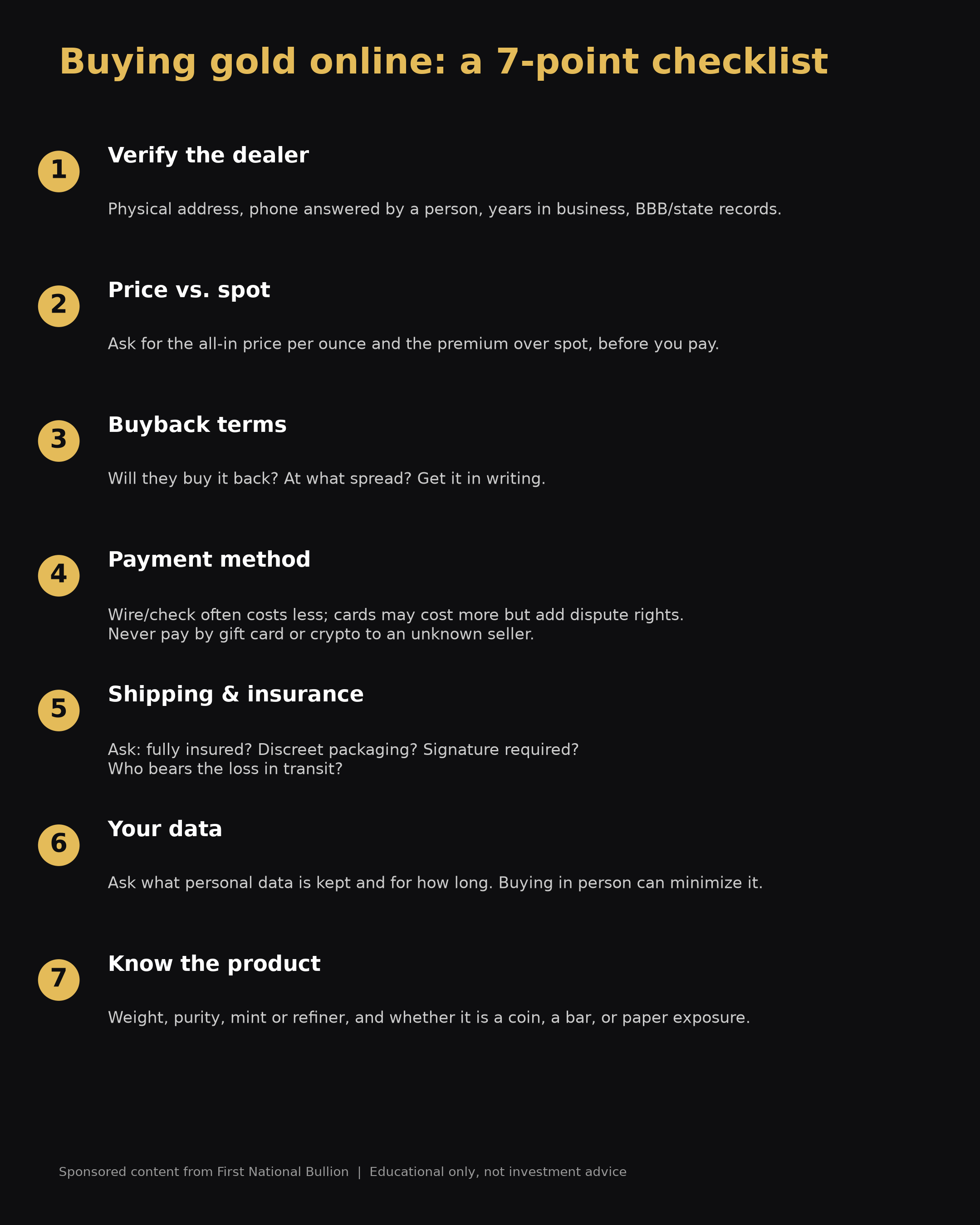
Buying gold online is easier than ever, which is a good reason to slow down. A few minutes of homework can help you avoid an expensive mistake.
Start with the price, the whole price
Gold trades at a "spot" price, a benchmark for large wholesale trades. Retail buyers generally pay more than spot: coins and bars carry a premium that covers costs such as minting, distribution and the dealer's margin. Premiums vary by product and by seller, so ask for the all-in price per ounce, including shipping and any payment surcharge, before you commit. Comparing premiums, not just headline prices, is a useful habit.
Verify the dealer
Look for a physical address you can visit, a phone line answered by a person, and a track record measured in years. Check Better Business Bureau and state consumer-protection records. Be wary of sellers who pressure you with "limited time" deals, who steer you toward products with unusually high markups, or who can't plainly explain how they set prices. Many established dealers will quote a buyback price as readily as a selling price; ask for it.
Pick a payment method with eyes open
Bank wires and checks often get a lower price, because they usually cost the dealer less to process and are much harder to reverse than card payments. Credit cards often carry a higher price because of processing fees, but they generally come with dispute rights under your card agreement. Some dealers hold shipment until a check or other payment clears. Never pay by gift card, and be very cautious about crypto or peer-to-peer transfers to a seller you can't verify. Those payments can be difficult or impossible to recover.
Understand shipping and insurance
Ask whether shipments are fully insured until delivery, whether packaging is plain, and whether a signature is required. Ask who bears the loss if a package goes missing, and when ownership passes to you. Inspect the package on arrival and keep the packing materials until you have checked the contents against your invoice.
Think about your data
An online purchase leaves a trail: your name, address, phone, payment details and what you bought. Data breaches can affect any kind of retailer. It is fair to ask a dealer what it stores, for how long, and how it protects it. Some buyers simply prefer to limit what they share.
Know your exit before you enter
Ask whether the dealer buys back what it sells, and at what spread. Mainstream products such as widely recognized government coins and bars from accredited refiners are generally the easiest to resell. Exotic or "collectible" pieces can be hard to sell near what you paid.
Consider the in-person option
At First National Bullion's store locations, you can buy without creating an online account and talk the purchase through with a local person. Stores accept cash, credit card or wire, and you can often take in-stock metal home the same day once payment has cleared. You see the product before you pay and avoid shipping risk. Identification may be required for some purchases. Online or in person, the checklist is the same: clear pricing, a verifiable dealer, a payment method you understand, insured delivery, and a clear way to sell later.
Get price updates and guides by email
By signing up, you agree to receive marketing emails from First National Bullion. Unsubscribe anytime. View our Terms and Privacy Policy.
Sponsored content paid for by First National Bullion. For general information only, not investment, tax or legal advice, and not a recommendation to buy any specific product. Precious metals prices go up and down, and you can lose money.