
Silver Coins vs. Bars: Which Should You Purchase?
By Jon Cavuoto

Key Takeaways
- The difference between silver coins vs. bars is not their intrinsic value, but their liquidity, premiums, storage efficiency, and market behavior.
- Silver coins are generally more liquid because of easier recognition and government backing.
- Silver bars are a more cost-effective option for bulk silver purchases because they typically carry lower premiums.
- Regarding storage, bars are more compact and easier to stack, while coins require more storage space.
Investors putting together a physical silver investment portfolio often debate the choice between silver coins vs. silver bars. Although both contain the same core metal—pure silver—they vary in cost premiums, ease of resale, storage, and long-term practicality. Understanding the differences between the two options is critical to building a portfolio that aligns with your financial goals.
Whether you're a first-time buyer or a seasoned investor, an in-depth silver coins vs. bars comparison can help you make an informed decision.
Understanding Silver Bullion vs. Coins
Precious metals have long been viewed as a dependable way to preserve wealth during uncertain economic conditions. Silver is especially attractive for new investors because of its affordability. It is commonly available in two primary forms: bullion and coins.
Bullion is the broad term for investment-grade silver valued primarily for its metal content. It is sold by weight and comes in various forms, including bars, rounds, and coins. However, coins are a specific type of bullion produced by government mints that carry a legal face value and are recognized as legal tender.
As we compare silver coins vs. bars, keep these distinctions in mind.
Silver Coins vs. Silver Bars: The Key Differences
While both coins and bars closely track silver's spot price, their structure and market behavior differ in several important ways.
Liquidity
In the silver bullion vs. coins debate, liquidity is one of the most important considerations. Silver coins are generally easier to resell because they are widely recognized throughout the world. They often command higher premiums over spot due to government backing and buyer confidence.
The American Silver Eagle is among the world's most recognized bullion coins. Canadian and European mints also produce highly respected government-issued silver coins. Most of these coins are legal tender, although there are exceptions, such as the South African Krugerrand.
Silver bars are generally less liquid because larger bars can be more difficult to divide for resale and may require additional verification of authenticity. Smaller bars are easier to liquidate but typically carry higher premiums than larger bars.
Comparing silver coins vs. bars strictly on liquidity, coins generally provide faster and more convenient resale opportunities.
Premiums and Cost Efficiency
Another significant difference between silver coins vs. silver bars is the premium paid above silver's spot price.
Large silver bars usually carry lower premiums, making them the better value for investors focused on accumulating the greatest number of ounces for the lowest cost. Their simpler manufacturing process contributes to the lower premium.
Silver coins typically command higher premiums because of minting costs, government backing, collectible appeal, and legal tender status. While this increases their purchase price, it also enhances buyer confidence and market recognition.
For investors focused primarily on maximizing ounces per dollar, silver bars generally offer the better value.
Practical Handling and Storage
Storage is another important consideration in the silver coins vs. bars comparison.
Because they are compact and stack efficiently, silver bars are easier to store in large quantities and are often preferred by high-volume investors.
Silver bars are typically privately minted and derive their value strictly from weight and purity. They are available in numerous sizes and designs from a variety of mints.
Silver coins usually require more storage space because many investors keep them in protective holders. However, their smaller denominations make them easier to sell in smaller increments.
Long-Term Value and Market Behavior
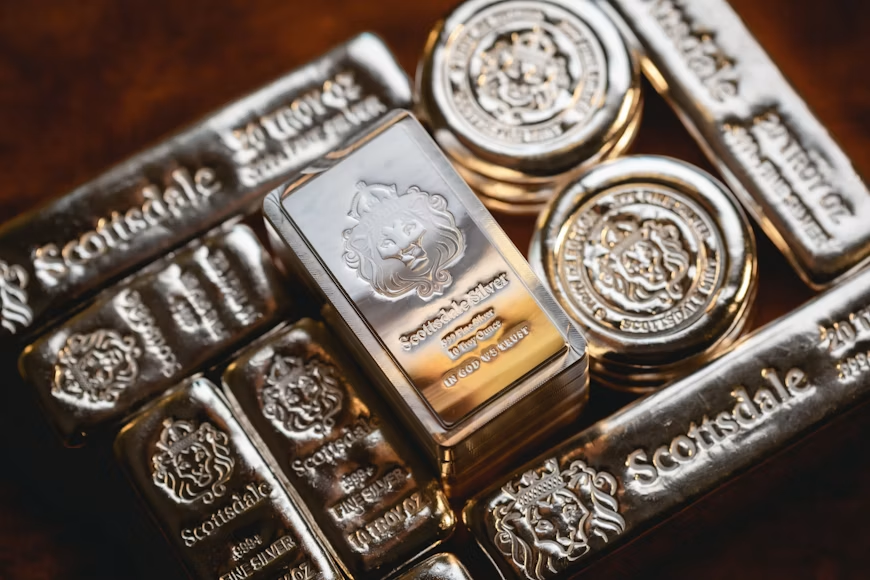
Because the silver content itself is identical, differences in long-term value are largely driven by investor demand and market preferences.
Silver coins often attract stronger retail demand because of their government backing and widespread recognition. During periods of economic uncertainty, they typically trade more actively because buyers have confidence in their authenticity.
Silver bars derive their value almost entirely from their purity and weight, with prices closely following the silver spot price.
Both products serve as effective stores of value. Ultimately, your choice between silver coins vs. silver bars depends on your investment objectives and prevailing market conditions.
Here's a comparison of silver bullion vs. coins:
| Factor | Silver Coins | Silver Bars |
|---|---|---|
| Premiums | Higher premiums due to minting and demand | Lower cost per ounce |
| Liquidity | High because of global recognition | Moderate, depending on size and mint |
| Storage | Requires more storage space | Compact and efficient for bulk storage |
| Divisibility | Easier to sell in smaller quantities | Less flexible for partial liquidation |
| Authenticity | Government-backed and widely trusted | May require additional verification |
| Best For | Liquidity and flexibility | Large-scale silver accumulation |
Dealers: Where You Purchase Silver Matters
Whichever option you choose, silver coins vs. bars, always buy from a reputable dealer. Properly marked bullion with verified weight and purity helps preserve resale value. Physical condition also matters, especially for collectible pieces, making proper storage an important consideration.
First National Bullion offers a wide selection of silver coins and silver bars, along with gold, platinum, and palladium products. Our knowledgeable team can help you choose the right products based on your investment goals.
FAQs
Which is the better pick: silver bullion vs. coins?
Neither is universally better. Coins provide greater liquidity and are generally easier to sell, while bars offer lower premiums and maximize the amount of silver you receive for your investment.
Which is better for beginners: silver coins vs. bars?
Many beginners start with silver coins because they are easy to recognize, widely accepted, and highly liquid. However, bars can also be an excellent starting point for investors focused primarily on cost efficiency.
Can I mix silver coins and silver bars in my portfolio?
Yes. Many investors own both. Coins provide flexibility and liquidity, while bars support long-term accumulation at a lower premium.
Do silver coins or bars perform better during a financial crisis?
Silver coins often perform better when liquidity becomes especially important because they are generally easier to buy and sell quickly.
The statements made in this blog are opinions, and past performance is not indicative of future returns. Precious metals, like all investments, carry risk. Precious metals and coins may appreciate, depreciate, or stay the same in cash value depending on a variety of factors. First National Bullion does not guarantee, and its website and employees make no representation that any metals for sale will appreciate sufficiently to earn the customer a profit. The decision to buy, sell, or borrow precious metals, and which precious metals to purchase, borrow, or sell, are made at the customer's sole discretion.