
How Can I Know if My Gold Is Real?
Throughout history, gold has been priced for its distinctive appearance, lasting value, and scarcity. However, one distinct question comes up when you have gold in your hands “How do you know if it’s real gold? With today’s counterfeit precious metals being so convincing, relying solely on visual inspection is no longer enough to confirm authenticity.
Learning how to distinguish between fake vs real gold can protect you from fraud, protect your money, and make you more confident when making buying decisions. From simple at-home tests to professional evaluations, we’ll teach you how to tell the difference between real gold and counterfeit pieces before making an important purchase or sale.
Read on to learn how to find out if gold is real. Whether you’re purchasing gold for the first time or have years of investing experience, these practical tips can help you make informed decisions and protect your investment.
Effective Ways to Verify Gold
Here are proven techniques that help separate genuine gold pieces from counterfeits:
-
Magnet Test
One simple and easy way to distinguish between fake and real gold is by testing it with a strong magnet. Simply take a strong magnet and see if your piece of jewelry sticks to it. Real gold won’t stick to a magnet. If you’re still not convinced your gold is real or fake, it’s time to try the next method.
-
Acid Test
The acid test is another easy at-home technique to find out if gold is real. Rub the gold item on a black stone or a touchstone. Real gold will leave a visible mark. Then test the mark by wiping it with nitric acid. Nitric acid will dissolve a mark left by any item that isn’t gold.
Now, if you still have a visible mark on your stone, apply nitric acid and hydrochloric acid. If your mark is dissolved, you have genuine gold.
This test can be modified a bit by adjusting the strengths of the acids to determine the fineness of the gold. If you don’t have access to the materials for an acid test, try the next method.
-
Stamps & Hallmarks
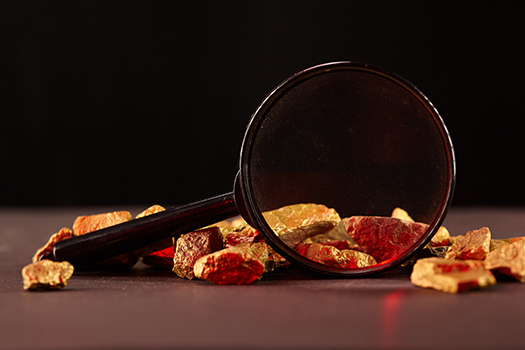
Use a magnifying glass to check the piece for markings. A hallmark or stamp will not only help you tell apart fake from real gold; it’ll also tell you the purity of the gold in question. If you find a stamp, here’s what it indicates:
- 916 stamp is for 22k gold
- 750 stamp is for 18k gold
- 585 stamp is for 14k gold
- 375 stamp is for 9k gold
The hallmark stamped into the gold piece is a clear indicator of the authenticity of the gold.
-
Skin Test
There are two ways you can use your skin to find out if gold is real.
The first way is to put liquid foundation on your forehead, then wipe the gold item on your forehead and wait to see if there’s a reaction. If there is, a black line will appear on your forehead, meaning you have real gold.
The second skin test needs a person with anemia or an iron deficiency. Take the gold item and run it across the person’s forehead. If a black line appears, the gold is real.
Protect Your Investment With Gold Authentication
At First National Bullion, we believe that being able to determine if gold is real is an important skill for anyone who owns, buys, or invests in precious metals. Simple at-home tests are a great starting point to distinguish fake vs real gold. However, professional testing can provide a higher level of confidence.
To purchase gold, silver, palladium, or platinum that has already been proven for its authenticity, trust First National Bullion. We’re a trusted national bullion dealer with over 19+ years of industry experience. We also maintain a large inventory across our physical and online stores, fully standing behind each piece. Find a store near you or call 480-546-8928.
FAQs
What are the biggest differences between fake vs real gold?
The most noticeable differences are in their weights, density, magnetic properties, color consistency, and how well the metal resists tarnish. Real gold is naturally dense, non-magnetic, and retains color for years, while counterfeit pieces often chip, discolor, or show magnetic attraction.
Can vinegar be used to find out if gold is real?
Yes, vinegar can be used to determine authenticity. Because gold is naturally resistant to corrosion, it shows little to no reaction when exposed to vinegar. However, fake gold or gold-plated metals react or discolor because the underlying metals are chemically reactive.
When performing this test, be cautious to avoid damaging jewelry.
What do gold hallmarks mean?
Hallmarks are stamped on gold items to indicate their purity. Some of the most common markings include:
- 24K or 999 = 99.9% pure gold
- 22K or 916 = 91.6% gold
- 18K or 750 = 75% gold
- 14K or 585 = 58.5% gold
- 10K or 417 = 41.7% gold
While they’re useful indicators of pure gold content, these marks can also be counterfeited. Therefore, additional testing is recommended.
Does real gold tarnish or change color?
No, pure gold endures through the years without tarnishing because it’s resistant to oxidation. However, lower-karat gold alloys may still dull over time because of the silver, nickel, or copper in them. Even still, genuine gold should not rust, flake, or have another metal underneath.
When should you have gold professionally authenticated?
Conduct professional authentication whenever you’re purchasing collectible coins, expensive bullion, inherited pieces, estate jewelry, or any gold item with uncertain origins. The cost of professional verification is minimal compared to what you’d lose purchasing counterfeit gold.
Disclaimer: The statements made in this blog are opinions, and past performance is not indicative of future returns. Precious metals, like all investments, carry risk. Precious metals and coins may appreciate, depreciate, or stay the same in cash value depending on a variety of factors. First National Bullion does not guarantee, and its website and employees make no representation, that any metals for sale will appreciate sufficiently to earn the customers a profit. The decision to buy, sell, or borrow precious metals and which precious metals to purchase, borrow, or sell are made at the customer’s sole discretion.