
Understanding the Difference Between Bullion, Coins, and Numismatics
By SEO User

Key Takeaways
- Bullion is valued strictly for its metal weight and purity.
- Coins derive value from their metal content, higher premiums, and greater liquidity.
- The value of numismatics is determined by their rarity, history, and collector demand.
Precious metals are generally known for wealth preservation and investment potential, but not all metal investments work the same way. Therefore, before investing or collecting, it is helpful to know how different types of precious metals—bullion, coins, and numismatics—compare.
In particular, many buyers lack clarity on what numismatics are, and how they differ from traditional investment-grade precious metals. Other terms that buyers use interchangeably are bullion vs. coins, and some end up making purchase decisions that do not align with their goals.
Therefore, in this guide, we break down all three categories of precious metals in a simple and structured way. Let’s get after it.
What Is Bullion?
Bullion refers to forms of precious metals, including gold, silver, platinum, and palladium, whose value is determined by their weight and purity, rather than by artistic design or rarity. Bullion offers a simple and direct approach to investing in physical precious metals.
Bullion typically comes as:
- Bars (ingots)
- Rounds
- Standard investment coins
The value of bullion closely follows the global spot price of metals, making it an easy-to-understand option for investors seeking an uncomplicated investment vehicle for wealth preservation.
What Are Coins?
Coins are precious metal pieces minted by governments or private mints that carry both their intrinsic metal value and additional costs tied to production and demand, called premiums. Coins are commonly used in investment markets because they are well recognized and easy to buy and sell.
The key characteristics of coins are:
- Have recognizable designs and mint marks
- Carry higher liquidity in global markets
- Have slightly higher premiums than bullion bars
- In many cases, they are legal tender
In the bullion vs. coins comparison, coins are typically more flexible and easier to sell, whereas bullion bars tend to be more cost-efficient per ounce.
What Are Numismatics?
While "bullion" and "coins" are fairly familiar terms to most buyers, the concept of numismatics is often less clearly understood.
Numismatics is the study and collection of coins, currency, and related items whose worth is influenced by their rarity, historical significance, physical condition, and collector interest.
Examples of numismatic items include:
- Rare coins
- Historical currency
- Limited mint editions
- Coins with mint errors or other unique features
The value of numismatics is determined by the same qualifying factors—rarity, age, grading, and collector interest—which means that a numismatic coin can be worth far more than its actual metal content.
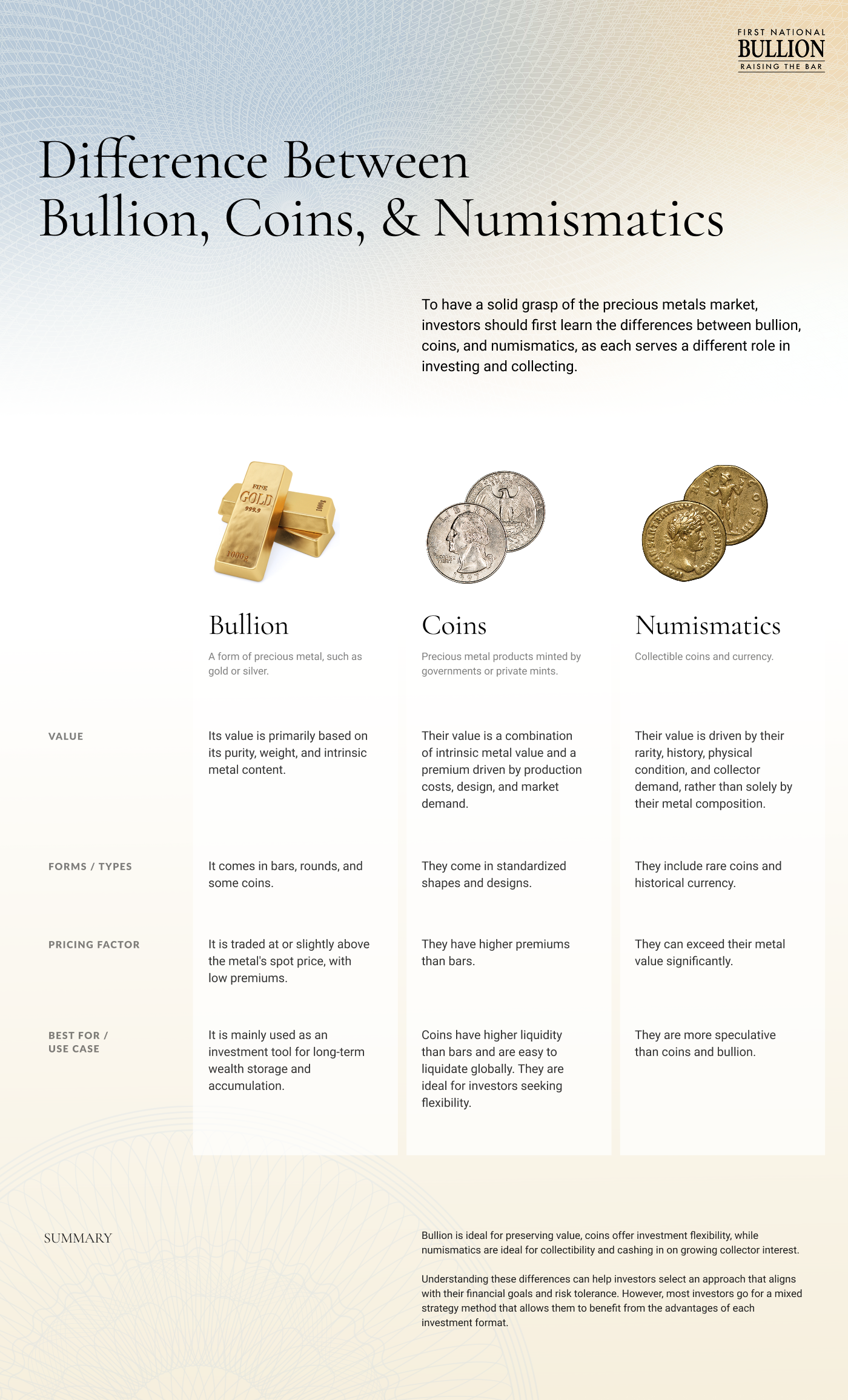
Summary of Key Differences: Bullion vs. Coins vs. Numismatics
The table below offers a visual breakdown of how the three precious metal formats differ:
| Category | Value Basis | Primary Purpose | Pricing Factor | Liquidity |
|---|---|---|---|---|
| Bullion | Metal weight and purity | Metal accumulation/investment | Spot price and a small premium | High |
| Coins | Intrinsic metal content plus premium | Investment and market flexibility | Minting and investor/collector demand | High |
| Numismatics | Rarity and collector interest | Collecting | Scarcity, condition, and historical relevance | Variable |
The comparison highlights that bullion and coins mainly differ in cost efficiency and market flexibility, whereas numismatics operate in a distinct category, largely shaped by collector demand.
Why Do These Differences Matter?
Knowing what numismatics are and the differences between bullion and coins is helpful, but how does this information benefit an individual considering a purchase?
Having a clear understanding of what each option is and its market behavior helps investors make informed decisions, such that:
- Investors leaning toward wealth preservation will go for bullion.
- Investors seeking market liquidity will choose coins.
- Collectors interested in the rarity and history of items will focus on numismatics.
Each category fulfills a distinct financial need, and failing to recognize their differences can create confusion and lead to mismatched expectations.
Most investors adopt a mixed strategy by combining bullion for stability with coins for liquidity. They generally avoid numismatics unless they have a collecting interest. Nonetheless, numismatics can be an excellent addition to a portfolio because their value may appreciate based on rarity and history.
Purchase Bullion, Coins, and Numismatics from First National Bullion
Whether you're a seasoned investor or a beginner taking your first step toward building a precious metals portfolio, it helps to work with a dependable dealer whose products are authentic and proven, like First National Bullion. We also offer a wealth of information about our products, along with live support from knowledgeable representatives to help you avoid common investor mistakes.
Explore our inventory today and see our wide range of products that are likely to fulfill any investment or collector's goals. Make your purchase today and enjoy free shipping on orders of $199 or more.
FAQs
Is numismatics a good investment?
It can be, but it tends to be more speculative than bullion or coins because its value is largely influenced by matching collector interests and market trends.
Are coins considered bullion?
Yes, some coins fit into the bullion category because they're valued primarily for their metal content. However, many others are numismatic or semi-numismatic.
How will I know if a coin falls under the bullion or numismatic category?
Go by what the coin is valued for. A bullion coin's value is determined primarily by its metal content and is often widely produced. A numismatic coin, on the other hand, derives much of its value from rarity, condition, age, and collector demand.
Does the value of numismatic coins always go up?
No. Numismatic coins do not guarantee appreciation. Their value depends on collector demand, rarity, condition, and overall market trends.
The statements made in this blog are opinions, and past performance is not indicative of future returns. Precious metals, like all investments, carry risk. Precious metals and coins may appreciate, depreciate, or stay the same in cash value depending on a variety of factors. First National Bullion does not guarantee, and its website and employees make no representation that any metals for sale will appreciate sufficiently to earn the customers a profit. The decision to buy, sell, or borrow precious metals and which precious metals to purchase, borrow, or sell are made at the customer’s sole discretion.