Can I Purchase Gold Coins from Banks?
Key Takeaways
- Most U.S. banks do not sell physical gold to customers. The few that do charge higher premiums and carry limited inventory compared to specialized dealers.
- The U.S. Mint does not sell bullion coins directly to the public. Instead, it distributes through a small network of Authorized Purchasers, who then supply retail dealers.
- Dedicated precious metals dealers offer wider product selection, competitive pricing, expert guidance, and buyback programs that banks can't match.
- Private gold ownership was illegal in the U.S. from 1933 until 1974, which is one reason banks moved away from gold transactions during the 20th century.
You might assume you can walk into your local bank branch and buy gold from bank tellers the same way you'd withdraw cash or purchase a certificate of deposit. It's a reasonable assumption. Banks deal in money, and gold has functioned as money for thousands of years.
The short answer: a handful of U.S. banks do sell gold, but the vast majority don't. And even at the banks that offer gold products, the experience is limited in ways that matter to investors. Here's what you should know before you try to get gold coins from bank branches, and where to look instead.
Do Banks Actually Sell Gold?
Some large financial institutions, including JPMorgan Chase and Citibank, have offered gold-related services to certain clients. But these services tend to be reserved for wealth management customers, not walk-in retail banking clients. The typical consumer checking account holder won't find gold coins on the product menu.
Banks avoid selling physical gold for a few reasons. Gold prices fluctuate throughout the trading day, which creates inventory risk. Storing, insuring, and shipping physical metal adds operational costs that don't fit neatly into a bank's existing infrastructure. And since gold doesn't generate recurring interest or fees the way a loan or a deposit account does, most banks see little incentive to buy gold from bank suppliers and resell it to retail customers.
The banks that do sell gold typically stock a narrow selection. You might find one or two bar sizes and a single coin type. Compare that to a precious metal store, where you can choose from dozens of products across gold, silver bullion coins, platinum, and palladium.
How Gold Left The U.S. Banking System
Before 1933, Americans could walk into a bank and withdraw gold coins. Gold Double Eagles circulated as everyday currency. That changed on April 5, 1933, when President Franklin D. Roosevelt signed Executive Order 6102, which required citizens to surrender their gold coins, bullion, and gold certificates to the Federal Reserve. The government would buy gold from bank depositors for $20.67 per troy ounce. Violators faced fines up to $10,000 (roughly $240,000 in 2026 dollars) or up to ten years in prison.
Private gold ownership stayed illegal for 41 years. Congress didn't restore the right to own gold until December 31, 1974. By that point, banks had spent four decades without any involvement in gold transactions. Most never reintroduced the service, so people still can’t buy gold coins from most banks.
When the U.S. Mint launched the American Gold Eagle program in 1986, it chose not to sell bullion coins directly to the public. Instead, the Mint built a distribution network of Authorized Purchasers, and that system still operates today. So even if you want to buy gold from bank counters, you'd be getting coins that passed through a dealer network anyway.
How Gold Coins Reach Retail Buyers
The U.S. Mint currently sells its gold, silver, platinum, and palladium bullion coins exclusively to a small group of Authorized Purchasers. According to the U.S. Mint's own website, these Authorized Purchasers are required to maintain a two-way market, meaning they must both sell and buy back bullion coins from the public.
Authorized Purchasers buy gold directly from the Mint at the LBMA PM Gold Price plus a percentage premium (3% for a 1 oz American Gold Eagle, scaling up to 9% for a 1/10 oz coin). They then distribute coins to wholesalers, retail dealers, and individual investors. None of those gold coins from bank branches come through this channel, because commercial banks aren't part of the Mint's Authorized Purchaser program.
This means that when you buy gold from bank branches (the rare ones that sell it), you're buying from a bank that sourced its gold through the same dealer pipeline you could access directly, often at a lower cost.
Drawbacks Of Buying Gold At A Bank
Even at banks that sell gold, there are trade-offs worth understanding.
Higher Premiums
Banks that sell precious metals typically charge higher per-ounce premiums than dedicated dealers. Gold isn't a bank's core business, so they price in extra margin to cover the hassle of handling a product outside their usual operations.
Limited Product Range
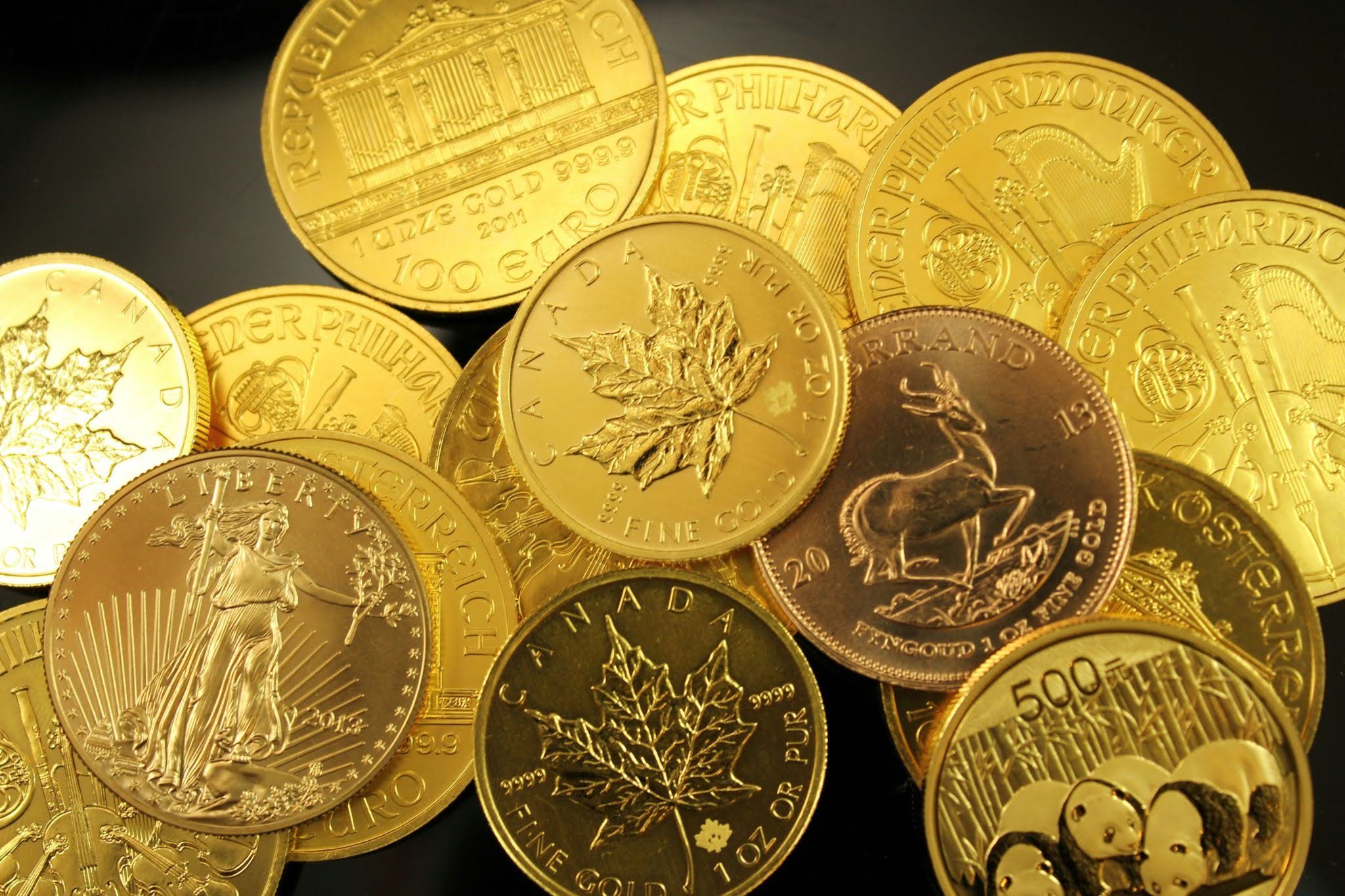
If you buy gold from a bank branch, you might have access to only one or two gold bar sizes. A dedicated dealer carries American Gold Eagles, Canadian Maple Leafs, South African Krugerrands, Austrian Philharmonics, bars from refiners like Valcambi and PAMP Suisse, and fractional coins ranging from 1/10 oz to 1 oz. That variety matters when you're building a position over time. Trying to get gold coins from bank inventories means accepting whatever they happen to have in stock.
No Specialist Guidance
Bank tellers and personal bankers are trained in deposit products, lending, and financial planning. They're not trained in precious metals. A dedicated dealer can walk you through the differences between bullion and numismatic coins, explain how premiums work across different products, and help you understand storage options like Brinks vaulting or a self-directed IRA. That same expertise just isn’t available when you buy gold from a regular bank. To learn more about why we need gold in a diversified portfolio, it helps to work with people who specialize in the metal.
No Buyback Programs
Most banks that sell gold or gold coins don't buy it back from customers. If you need liquidity later, you'll need to find a dealer anyway. Many established dealers, by contrast, offer buyback programs that let you sell your gold back at competitive prices when you're ready.
Where To Buy Gold With Better Selection
First National Bullion has served investors since 2006 with physical locations in California and Arizona, plus an online store that ships nationwide. You can buy from a full range of gold, silver, platinum, and palladium products not found in banks, from fractional coins to kilogram bars, all sourced through established supply chains and checked for authenticity.
Every order is packaged under security cameras and double-checked before shipping. All shipments are insured and require a signature at delivery. And if you'd rather buy gold online, First National Bullion's eCommerce store gives you the same selection and service available at its brick-and-mortar locations.
Instead of settling for the limited options available when you try to find gold coins from bank tellers, work with a dedicated precious metals dealer who can help you make informed decisions about your holdings before buying gold from a bank.
Frequently Asked Questions
Can I order gold coins directly from the U.S. Mint?
Not bullion coins. The U.S. Mint sells its bullion-grade American Eagles and American Buffalos exclusively to Authorized Purchasers, who then supply retail dealers and the public. The Mint does sell collectible Proof and Burnished coins directly to consumers through its website, but those carry collector premiums above the metal's spot value.
Why don't more banks sell gold?
Gold doesn't generate the recurring revenue that loans and deposit accounts produce. Holding physical gold inventory also creates storage, insurance, and price-fluctuation risks that most banks prefer to avoid. The few that do offer gold tend to restrict the service to high-net-worth clients within their wealth management divisions.
Is it safer to buy gold from bank branches or from a dealer?
Both can be safe, but the better question is which option offers more value. Reputable dealers like First National Bullion are transparent about pricing, authenticate every product, insure all shipments, and offer buyback programs.Buying gold coins from banks provides institutional trust but lacks the product knowledge, selection, and ongoing relationship that a specialized dealer delivers.
What types of gold coins are best for new investors?
American Gold Eagles and Canadian Gold Maple Leafs are popular starting points. Both are government-minted, widely recognized, and easy to resell. The 1 oz size offers the lowest premium per ounce of gold content, while 1/4 oz and 1/10 oz fractional coins let you start with a smaller dollar commitment.
The statements made in this blog are opinions, and past performance is not indicative of future returns. Precious metals, like all investments, carry risk. Precious metals and coins may appreciate, depreciate, or stay the same in cash value depending on a variety of factors. First National Bullion does not guarantee, and its website and employees make no representation, that any metals for sale will appreciate sufficiently to earn the customers a profit. The decision to buy, sell, or borrow precious metals and which precious metals to purchase, borrow, or sell are made at the customer's sole discretion.